Three courses give your staff the basics of customs handling: Swedish export, Swedish import and Norwegian import. Richard Coster leads them, and we tailor the content to how you work today.
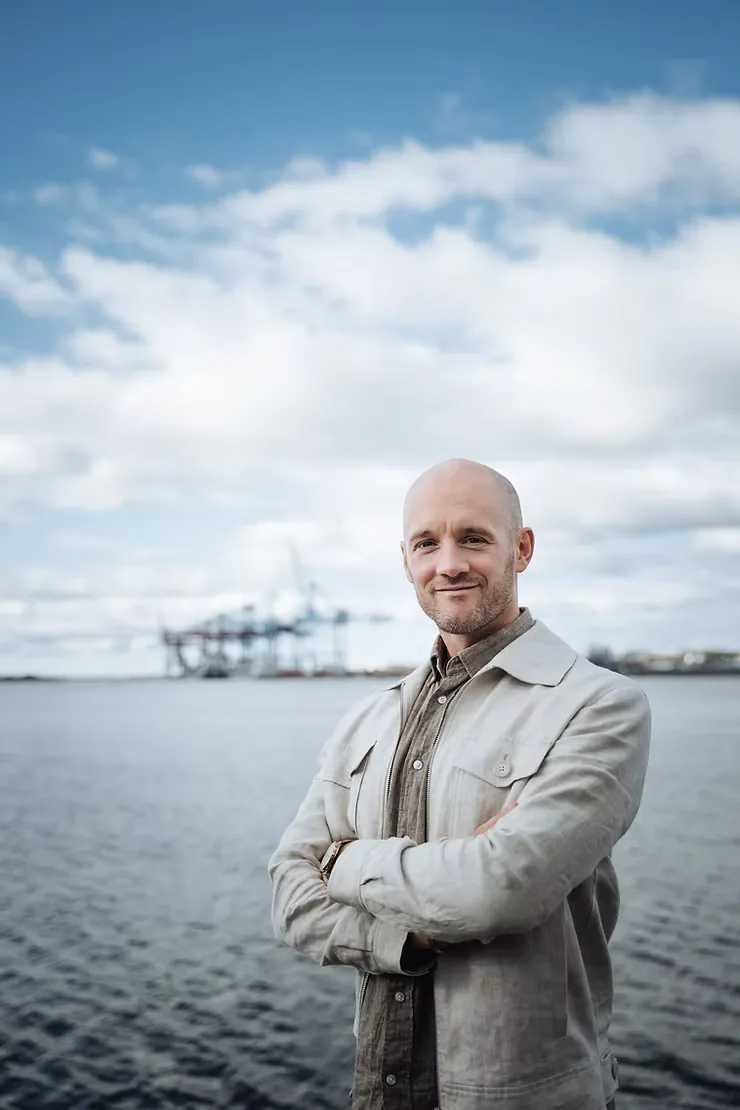
Richard Coster and David Olsson at the Tullify office.
Who the training is for
For those who handle import or export in the company but have never had a walkthrough of how customs works.
It is often buyers, logistics staff, finance staff or sales staff who have been given the responsibility on top of their job. After the training they speak the same language as the forwarder and Swedish Customs. They also learn to recognise when something needs checking before the goods are shipped.
Three courses
Choose one course or combine several.
Course 1
The basics of Swedish export
For companies selling to countries outside the EU. This is where it is decided whether the sale is exempt from VAT and what duty the buyer has to pay.
Why the export must be confirmed as completed for the sale to be exempt from VAT.
The commodity code, which governs export restrictions and the duty the buyer pays.
Origin: when the goods can get a lower duty at the buyer's end under a free trade agreement, and which proof of origin applies.
Incoterms: who is responsible for export clearance and what that means for the price.
When the goods need an export licence, and how sanctions limit what you may sell and to whom.
Course 2
The basics of Swedish import
For companies buying goods from countries outside the EU. Most import errors come to light only when Swedish Customs reviews afterwards. By then the question often covers several years back.
The commodity code: how the duty rate and restrictions follow from it, and what a binding tariff information is.
The customs value: what counts towards it beyond the invoice amount, such as freight and insurance up to the EU border.
Import VAT, which a VAT-registered company reports in its VAT return to the Swedish Tax Agency.
Preferential treatment: how a free trade agreement can lower the duty and what proof it takes.
Goods that require a licence, a certificate or a border check.
The broker's role, and which responsibilities stay with you when a customs broker declares for you.
Course 3
The basics of Norwegian import
For Swedish companies selling to Norway. Norway is part of the EEA but not of the EU customs union. That is why the goods are declared twice: for export in Sweden and for import in Norway.
Who the importer is in Norway, and what the DDP delivery term requires of you as the seller.
Norwegian import VAT, 25 per cent on most goods.
The Norwegian customs tariff, where most industrial goods are duty free while agricultural goods can carry high duties.
The origin rules in trade between the EU and Norway.
Digitoll, Norwegian Customs' requirement to notify the goods electronically before they cross the border.
How the export in Sweden and the import in Norway connect at the border crossing.
How it works
You tell us which goods you trade in and who handles what today. Based on that we plan the training with examples from your own trade. We agree on length and format together.
Course leader
The goal is simple. Afterwards, you should be able to write an export declaration on your own.
Richard CosterFounder and partner, Tullify
Richard has worked in the customs industry for 18 years, in administration, consulting and sales. Read more about the team behind Tullify.
Common questions
Which course should we start with?
Start with the one that matches most of your trade. If you sell to Norway you usually need both Swedish export and Norwegian import, because the goods are declared in both countries.
Can we combine the courses?
Yes. They share the same foundation, such as the commodity code and the customs value, so they can be put together into one course.
What does a course cost?
It depends on the format. Tell us what you want your staff to be able to do afterwards, and you will get a proposal.
How is this different from a consultation?
Training gives your staff the knowledge to handle customs questions themselves. In a consultation we go through your own goods flow and deliver a summary of what should change.