Importing boats
Duty on boats is low and varies with type and length, between zero and 2.7 per cent. A sailing or motor boat designed for the open sea and at least twelve metres long is imported duty free from all countries.
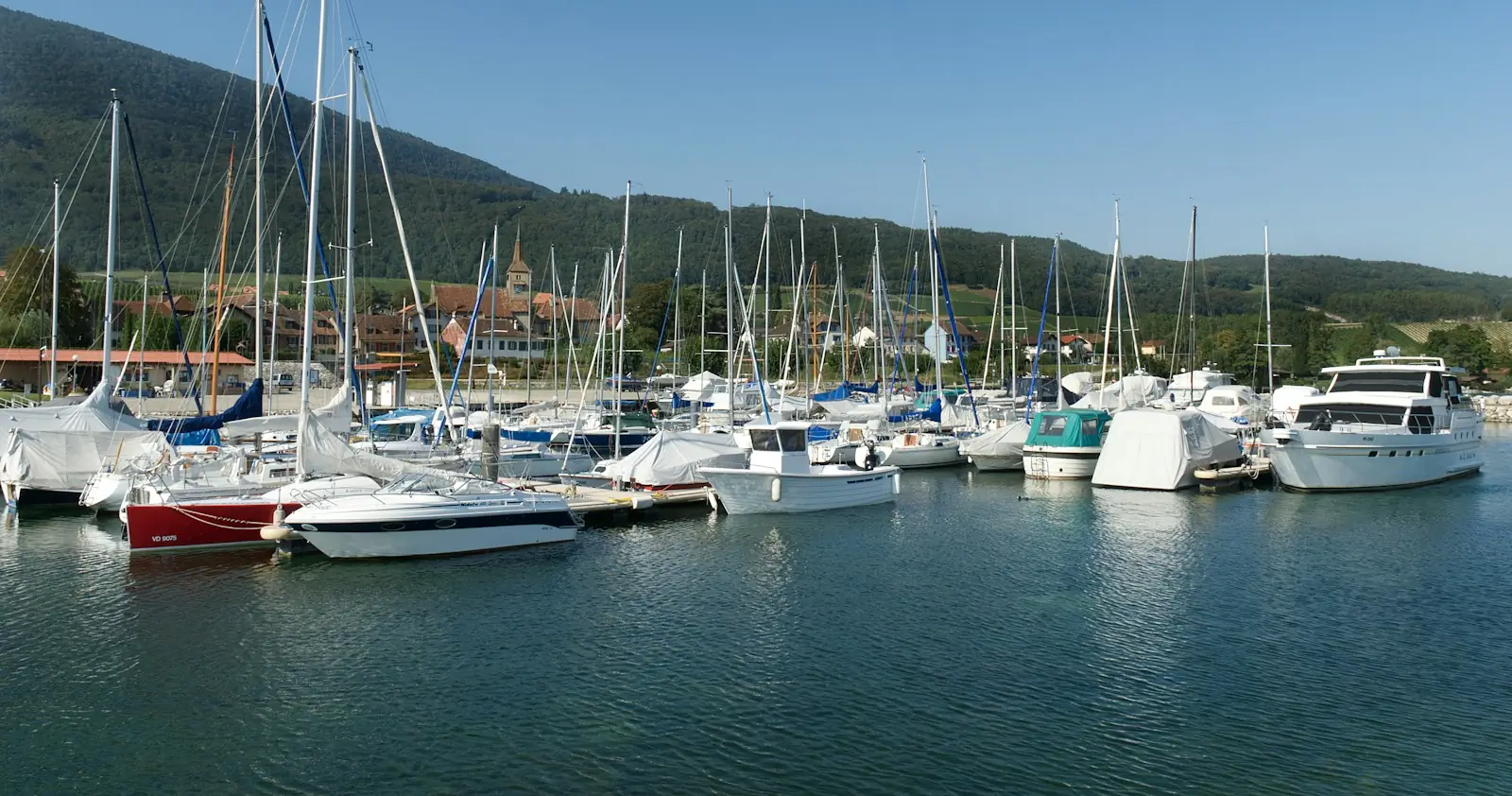
The rate depends on the boat, not the country
Unlike cars, where the standard rate is ten per cent, boats sit low. The most important dividing line is not between countries but between types of boat.
- Zero per cent
- Sailing and motor boats designed for the open sea with a length of at least twelve metres. Applies against all countries, with no proof of origin.
- 1.7 per cent
- The main rule. Sailing and motor boats that do not meet the open sea criteria, regardless of length.
- 2.7 per cent
- Inflatable boats and other boats with an unladen weight of no more than 100 kilograms.
- Zero with proof of origin
- Norway, the United Kingdom, the United States, Switzerland, Japan, Canada and some thirty other countries, if the boat originates there.
Duty rates for leisure boats
The zero rate for vessels designed for the open sea requires no proof of origin at all. It follows from the commodity code, which is why classification is the first thing we do.
A twelve metre boat built for the sea is duty free. The same boat at eleven metres costs 1.7 per cent. One metre decides it.
A detail that is often missed: a motor boat with an outboard engine does not fall under the headings for motor boats but is classified as another vessel. An outboard driven boat over 7.5 metres therefore lands on 1.7 per cent even if it otherwise resembles an inboard.
VAT and the taxable amount
VAT is twenty-five per cent. It is calculated on the customs value, that is the purchase price plus freight, insurance and handling costs up to the EU border, plus the duty, plus incidental costs up to the first place of destination in Sweden.
A boat with a customs value of 800 000 kronor and 1.7 per cent duty gives 13 600 kronor in duty. VAT is then calculated on 813 600 kronor and comes to 203 400 kronor. The same boat classified as sea-going gives no duty and 200 000 kronor in VAT.
Registration, and the myth about it
The most common misconception is that an imported boat has to be registered like a car. That is not the case.
- Under fifteen metres
- No registration requirement. Voluntary registration is possible from five metres of hull length.
- From fifteen metres
- Must be registered in the boat section of the ship register.
- Over twenty-four metres
- Counts as a ship under the Maritime Code and goes in the ship section. The threshold changed in 2025, it used to be twelve metres.
- Commercial use
- Registration required from five metres of hull length for cargo, towing, salvage, hire or fishing.
When the boat must be registered
What does always apply is the CE requirement, and that is where an import can actually stall. Without the documentation the boat is stopped at customs and a notified body must carry out a post construction assessment before it can be cleared.
Read on
More on how imports work, whatever the country, is on our page about importing into Sweden.
The duty rate follows the boat's commodity code. Read about customs classification of goods.
Common questions
Do I have to register the boat after importing it?
No, not for an ordinary leisure boat. Registration in the boat section of the ship register is compulsory only once the hull is at least fifteen metres. Below that, registration is voluntary from five metres.
There is also no vehicle tax, no registration inspection and no roadworthiness test for leisure boats. The whole chain that applies to imported cars has no counterpart here.
What does designed for the open sea mean?
It is a defined term in the customs tariff, not a matter of opinion. The notes to chapter 89 state that the duty free headings cover only vessels designed for the open sea with a length, excluding projecting parts, of at least twelve metres. A boat of eleven metres therefore carries 1.7 per cent even if it is built for the sea. On a boat worth a million kronor the difference is 17 000 kronor.
Is it duty free if I buy the boat in Norway?
Only if the boat has Norwegian origin under the EEA rules, and only if you claim the reduction in the declaration with valid proof of origin. Country of purchase is not the same as country of origin.
A used boat built in Germany and sold by a Norwegian owner does not normally have Norwegian origin. Such a boat can, however, often enter duty free as returned goods, because it was previously in free circulation in the union. That is a different rule with its own conditions.
Does the boat have to carry a CE mark?
Yes, for leisure boats with a hull length between 2.5 and 24 metres. The requirement does not depend on whether the boat is new but on it being placed on the union market, so it applies to a used boat from outside the EU as well. Boats manufactured or imported before 1998 are not covered, because the requirement came later.
If the documentation is missing, Swedish Customs will stop the boat. The way forward is a post construction assessment carried out by a notified body before customs clearance. The body issues the certificate and assigns the craft identification number. The requirement does not lapse, and if the boat has already been sold on, it can be grounds for rescinding the sale.
When does the boat count as a new means of transport?
The thresholds differ from cars. A vessel exceeding 7.5 metres counts as new if it is delivered within three months of first being taken into use, or if it has sailed no more than one hundred hours before delivery. A boat of 7.5 metres or less can never be a new means of transport.
These rules apply to purchases within the EU and decide where VAT is payable. On import from outside the EU, import VAT is charged whether the boat is new or used.
What documents does Swedish Customs need?
Purchase invoice, purchase document, receipt or other evidence of the boat's value, and the foreign registration certificate if the boat has been registered. An insurance certificate is not a customs requirement. For the CE side it is the declaration of conformity, the builder's plate, the owner's manual and the identification number that count. There is no such thing as a CE certificate.
Can I sail the boat in myself?
If you live outside the EU you may keep the leisure boat temporarily within the union for eighteen months without charges and without declaring it, provided it is used and leaves within that period.
A declaration is required if the period is exceeded, if you live in the EU and sail a boat registered outside the union, or if the boat is left for winter storage in Sweden. Winter storage involving hull cleaning or engine overhaul may also count as inward processing and require authorisation.
What about the engine?
The engine is a separate product with its own and considerably higher duty rate. Buying a loose engine separately means different rules, and the rate is three to four times higher. See the page on boat engines and outboards.
