Importing an excavator from China
The duty rate on a Chinese excavator is zero per cent. What can cost is the wear parts, where antidumping duty may apply, and the CE responsibility that lands on you.
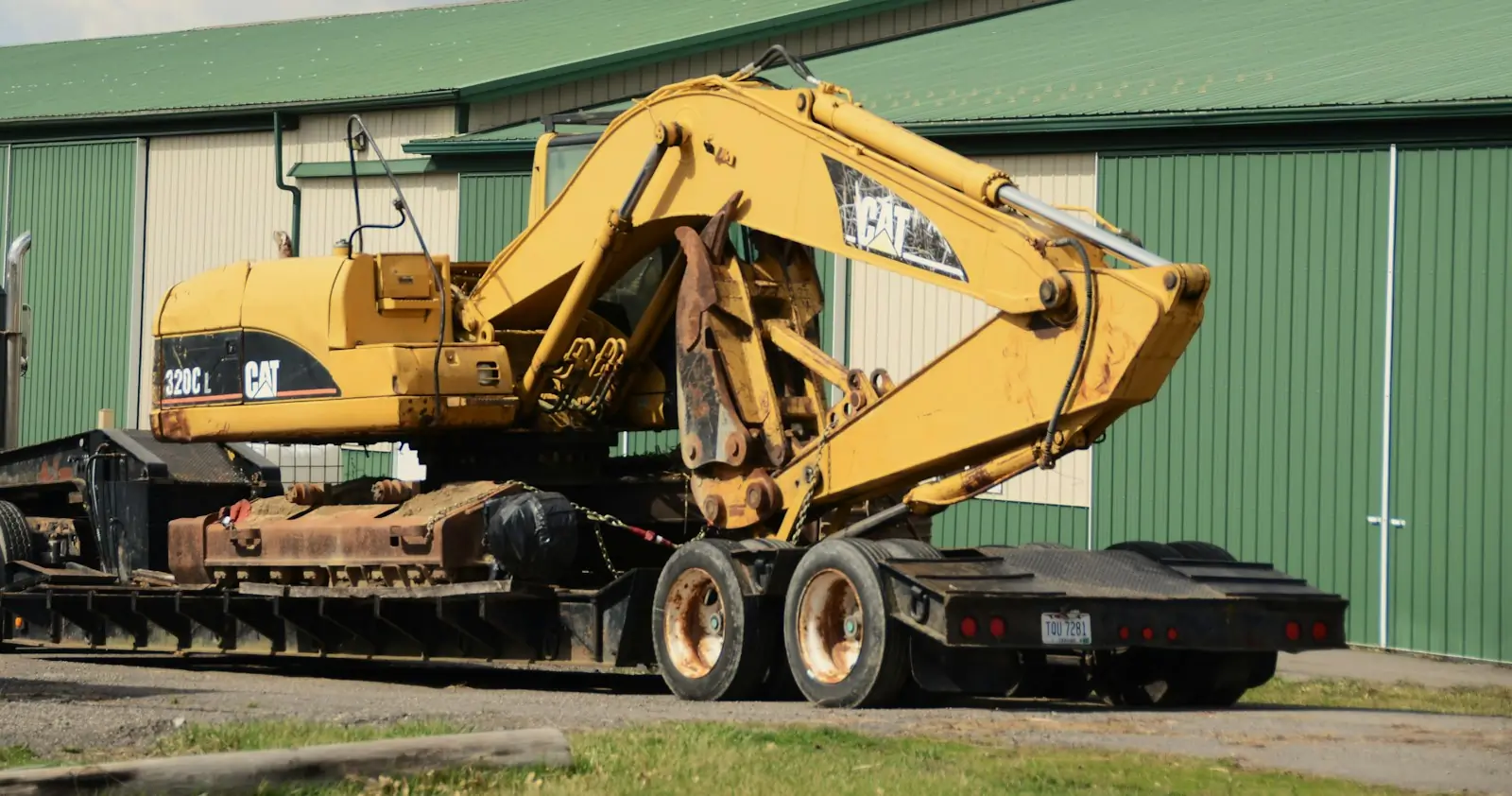
What you actually pay
Zero per cent duty on a machine from China surprises many people. It is true nonetheless, and it means attention belongs somewhere else.
- The machine
- Zero per cent duty. Applies to both tracked excavators and others, and there is no antidumping duty on the machine itself.
- Steel wear parts
- Antidumping duty may apply here. Steel track shoes from China have been covered since October 2025, with exclusions that must be checked article by article.
- Buckets and grabs
- Imports have been registered since February 2026 ahead of a possible duty, which means duty can be charged retroactively.
- VAT
- Twenty-five per cent. Reported to the Swedish Tax Agency if you are registered for VAT, not to Swedish Customs.
Charges on import
The commodity code splits into two branches, tracked excavators and others. Both are at zero per cent today, but the split governs which other measures can hit the goods, so it has to be right in the declaration.
An antidumping duty on wear parts does not show up in the ordinary duty rate. It is found only by looking up the article against the country of origin.
The antidumping duty on the parts
This is the line where an import can become substantially more expensive than the calculation. The machine itself is free, but two measures sit on parts that are often ordered along with it.
Steel track shoes of Chinese origin have carried a definitive antidumping duty since October 2025. The measure has an exclusion route in the tariff, which means certain designs fall outside it. Which applies to your particular shoes is decided by the design of the article and must be checked against the text of the regulation before ordering.
Buckets and grabs have been registered since February 2026. Registration is not a duty, but it allows duty to be charged retroactively on what was brought in during the period. Here too it depends on what the article actually is.
Send us the article specification before you place the order and we will look up both measures against your goods. It takes a few minutes and can save a five figure surprise.
The CE responsibility lands on you
This is the second large item, and it costs time rather than duty.
- You become the manufacturer
- Where there is no responsible manufacturer within the EEA, whoever places the machine on the market is regarded as the manufacturer. So you do not become a representative, you become the manufacturer.
- What that means
- Technical documentation, risk assessment, an EU declaration of conformity in your own name, and a ten year retention obligation.
- Notified body
- Not required for a complete excavator, it is not listed in annex 4. Internal production control is enough. Rollover protection and falling object protection are separate products in annex 4.
- The rules right now
- Machinery Directive 2006/42/EC applies up to and including 19 January 2027, in Sweden through AFS 2023:4. The Machinery Regulation takes over on 20 January 2027.
The Machinery Directive in practice
Be alert to the Machinery Regulation often being mentioned as though it already applied. It starts to apply on 20 January 2027. Until then it is the Machinery Directive that governs, and a text that confuses the two cannot be trusted on anything else either.
After delivery
An excavator does not need roadworthiness testing like a vehicle, but it does need inspection as work equipment. The interval is 36 months to the first inspection, then 24, then every year. It is a recurring cost that rarely appears in any import calculation.
The rest of the China import
Delivery terms, payment, supplier checks, customs value and the document list are common to all imports from China and are set out on the page about importing from China. For machinery in general, including special transport and size, see the guide to machine imports.
Read on
The commodity code decides which measures can hit the machine. Read about customs classification of goods.
What the customs value is based on is explained on our page about the customs value declaration.
Common questions
What does the duty cost on an excavator from China?
Nothing. The duty rate is zero per cent on slewing excavators from China, both tracked and wheeled. That has been the case since 2005, and there is no China specific customs measure on the machine.
What does cost is the VAT, and what can cost is the parts. See the next question.
Is there antidumping duty on excavators from China?
Not on the machine. But on certain parts. Steel track shoes from China have carried a definitive antidumping duty since October 2025, and buckets and grabs have been registered since February 2026 ahead of a possible duty. Registration means duty can be charged retroactively on what was imported during the period.
Both measures have exclusions and boundaries that depend on the exact design of the article, so they must be checked against the invoice before you order. If you order spare tracks or buckets with the machine, it is that line that decides the calculation, not the machine.
The United Kingdom has also already introduced antidumping duty on Chinese excavators between eleven and eighty tonnes. It does not apply to imports into Sweden, but it shows the question is live.
Who is responsible for the CE marking?
You are. Where there is no manufacturer with responsibility within the EEA, whoever places the machine on the market is regarded as the manufacturer. It is a common misconception that you become the manufacturer's representative. That role requires a written mandate and is not something you can end up in by accident.
The manufacturer role means technical documentation, risk assessment and an EU declaration of conformity in your own name. There is no such thing as a CE certificate, and no body issues CE marking. For a complete excavator no notified body is required.
Does the machine have to be inspected in Sweden?
For registration purposes, no. An excavator is normally a class II motor implement, designed for at most thirty kilometres per hour, and is not subject to roadworthiness testing. It must carry a slow vehicle sign and the operator needs the right qualification.
For occupational safety purposes, yes. An excavator with a service weight from 1 500 kilos must undergo recurring inspection by an accredited inspection body: the first time after 36 months, the second after 24, and every year after that. If the machine is equipped so that it meets the definition of a crane and is used for lifting, it must also be inspected as a crane.
What applies to a used machine?
The same, and often more awkwardly. What triggers the requirements is the machine being placed on the EEA market for the first time, not how old it is. The difference from a new machine is that there is rarely any manufacturer documentation to lean on, which means in practice you almost always end up in the manufacturer role.
What should I require from the supplier?
An EU declaration of conformity with the correct Swedish name, technical documentation, instructions in Swedish, a rating plate, and where relevant certificates for rollover protection and falling object protection. Never ask for a CE certificate. Also ask for the exact article designation of tracks and buckets, because that is where antidumping can strike.
Do I pay the VAT to Swedish Customs?
Only if you are not registered for VAT. A VAT registered company reports the import VAT to the Swedish Tax Agency in its VAT return, so the machine is not left sitting at the port waiting for a VAT payment to Swedish Customs. The VAT base is the customs value plus duty and other state charges plus freight and insurance up to the first place of destination in Sweden, which includes the domestic transport to your yard.
